%20(1).webp)
Why Choose an Iceland Elopement?
Most couples who end up eloping in Iceland did not start there. They started somewhere else, a venue, a guest list, a plan that kept growing, and at some point Iceland just made more sense.
The place does something to people. Mallorie and Tanar flew in from Michigan to celebrate their tenth wedding anniversary, full Viking fur coats, braided hair, beaded beard, and said their vows inside a cave at Reynisfjara while the Atlantic crashed in front of them. Vanessa and Brandon came from America, had a pagan ceremony by a lake in the Icelandic countryside, and ended the day in a natural hot spring as the sky turned dark. Neither day looked anything like a traditional wedding. Both of them were completely unforgettable.
That is what Iceland does. It gives you room to do it your way. There are some things to know before you go, and other things to explore and experience together once you arrive,
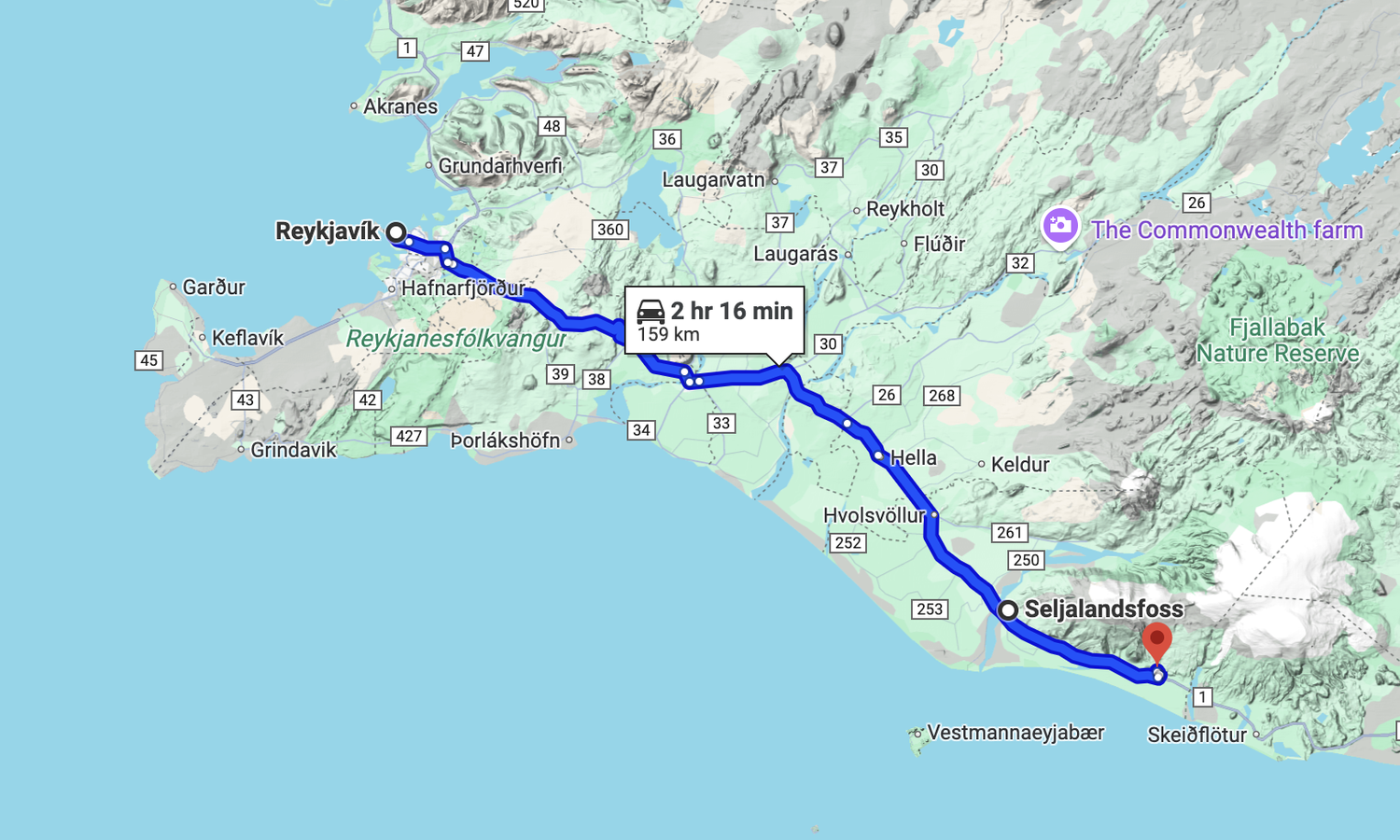
The south coast is where most elopements happen, and for good reason. You can be at Skógafoss within two hours of Reykjavik, sometimes with the place almost to yourself if you time it right. Reynisfjara is powerful and dramatic, though the wind off the water means you need to think about where you stand and when. Snæfellsnes is quieter, further west, a different character entirely, less visited and often more personal for it.
There is no single version of an Iceland elopement. Some couples want solitude and find it. Others arrive expecting crowds and discover that an early start changes everything. What they tend to share is the feeling afterwards that the day belonged to them in a way that a traditional wedding rarely does.
Intimate and Personal Elopement Experience
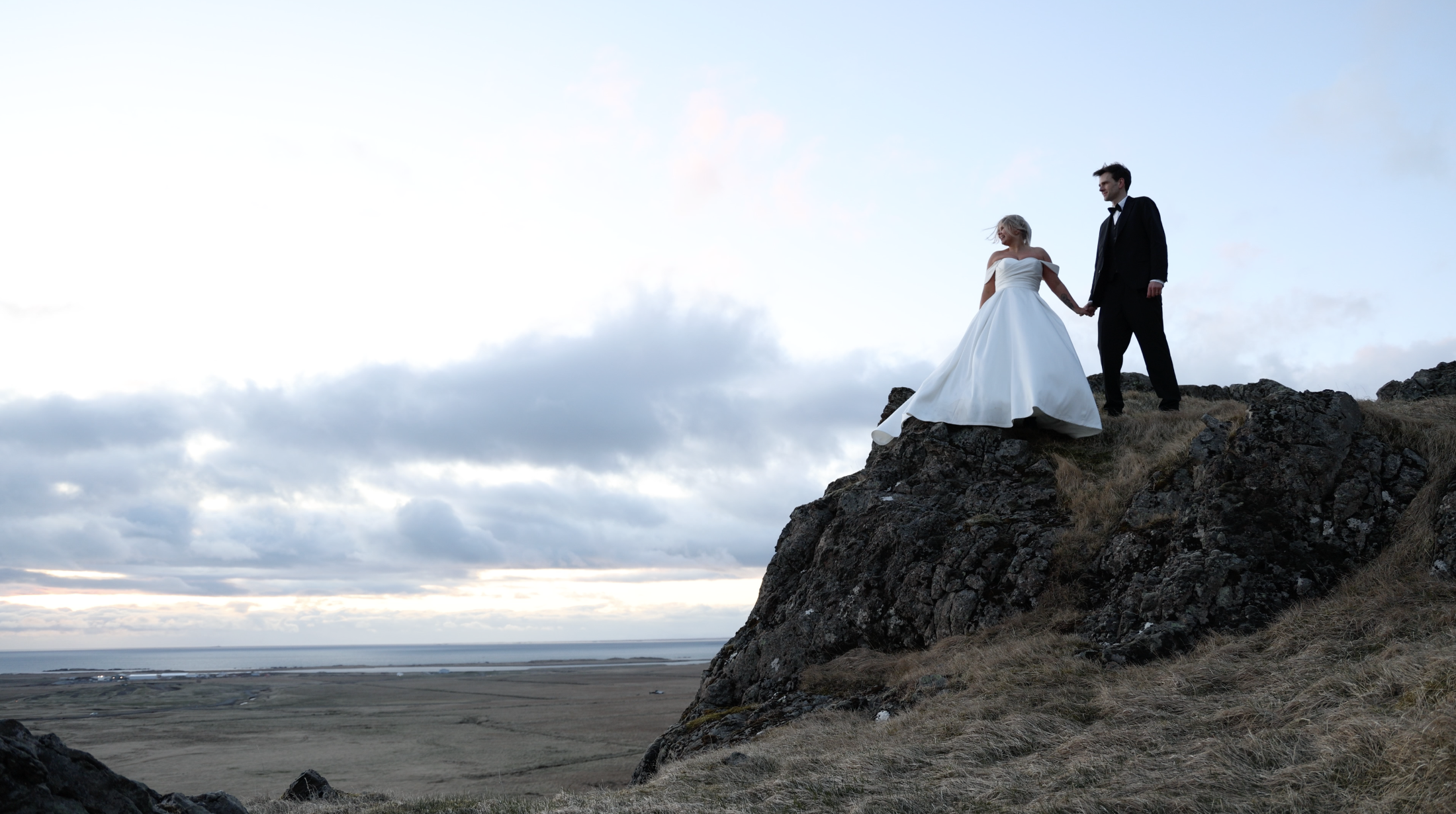
An Iceland elopement strips the day back to what actually matters. No table plans, no seating disputes, no schedule built around a caterer's timing. Just the two of you, somewhere that took your breath away before you even said a word.
Cynthia and Danielle drove through vast open landscapes and past thundering waterfalls before reaching Háifoss, where they said their vows completely alone. Nobody else around. Just the sound of the water and each other. That is the kind of moment that is almost impossible to manufacture in a traditional wedding setting, and in Iceland it is just a Tuesday.
The day can be as simple or as full as you want it to be. Some couples spend it moving between locations, taking their time, stopping when something feels right. Others choose one spot and stay there. What tends to matter most, looking back, is not how much ground they covered but how present they felt while they were there.
Unforgettable Northern Lights and Midnight Sun
Neither is guaranteed. That is the honest version, and it is worth saying upfront.
The northern lights need clear skies, darkness, and solar activity, and Iceland's weather does not always cooperate. From September through April there is a reasonable window, with the darkest months giving you the longest nights to work with. But cloud cover is the most common reason couples miss them, not a lack of aurora activity. The best approach is to want them without building the whole day around them.
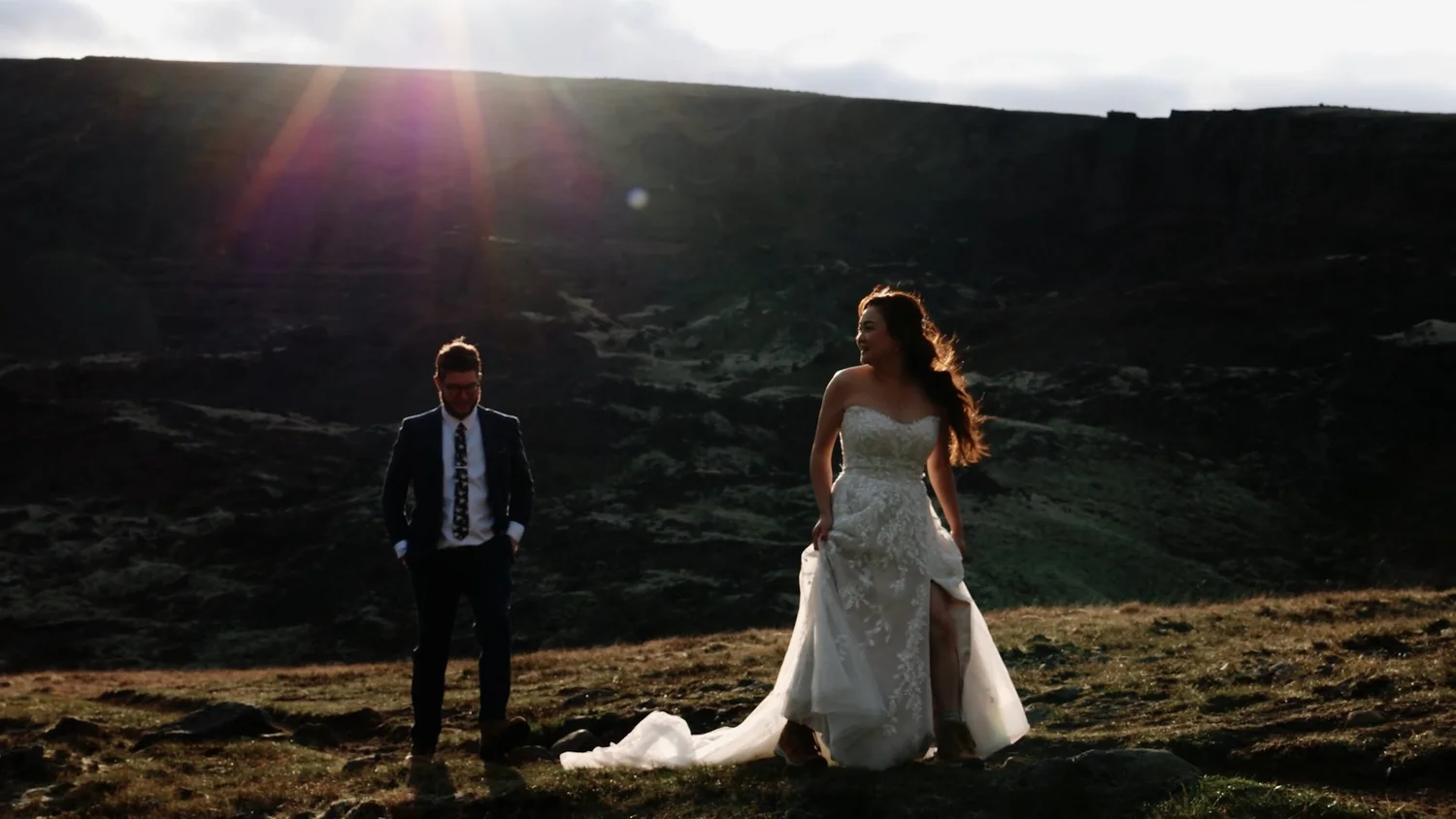
The midnight sun is different. In June, the light at 10pm is warm, low, and directional in a way that does not really exist at home. It just keeps going. Mallorie and Tanar were still out on the south coast late into the evening, the light doing something completely different to what it had been doing at midday. That kind of flexibility changes how a day can be planned entirely.
Both are worth experiencing. Neither should be the only reason you choose a particular date.
Adventure and Flexibility: Elopement Packages and Planning
Iceland elopements do not follow a fixed format. That is largely the point.
Some couples want to move. Multiple locations, long drives, stopping when something looks right. The south coast alone can take a full day if you let it, and most couples find that the unplanned stops end up being the ones they talk about most afterwards. Others want the opposite. One spot, enough time to actually be there, no rushing.
Both work. Iceland has enough variety that the day can be built around what suits you rather than what looks good on paper.
If you want to go further, the highlands open from late June and require a 4x4 to access legally. What sits behind those F roads is some of the most remote landscape in Europe. Super jeep tours, glacier walks, lava field hikes. None of it requires advance expertise, just a decent plan and some flexibility around weather, because conditions up there can change faster than they do on the coast.
A local elopement planner is worth considering if the logistics feel like a lot, particularly if you are coordinating everything from overseas. They know which locations get busy and when, which roads need specific vehicles, and how to build a timeline with enough breathing room that a weather change does not derail the whole day.
Accessible Yet Wild: The Ultimate Destination Elopement
One of the things that surprises most couples about Iceland is how quickly you can get somewhere that feels genuinely remote. Reykjavik is a small, easy city to navigate. Within thirty minutes of leaving it the landscape changes completely. Within an hour you are somewhere that looks like nothing you have seen before.
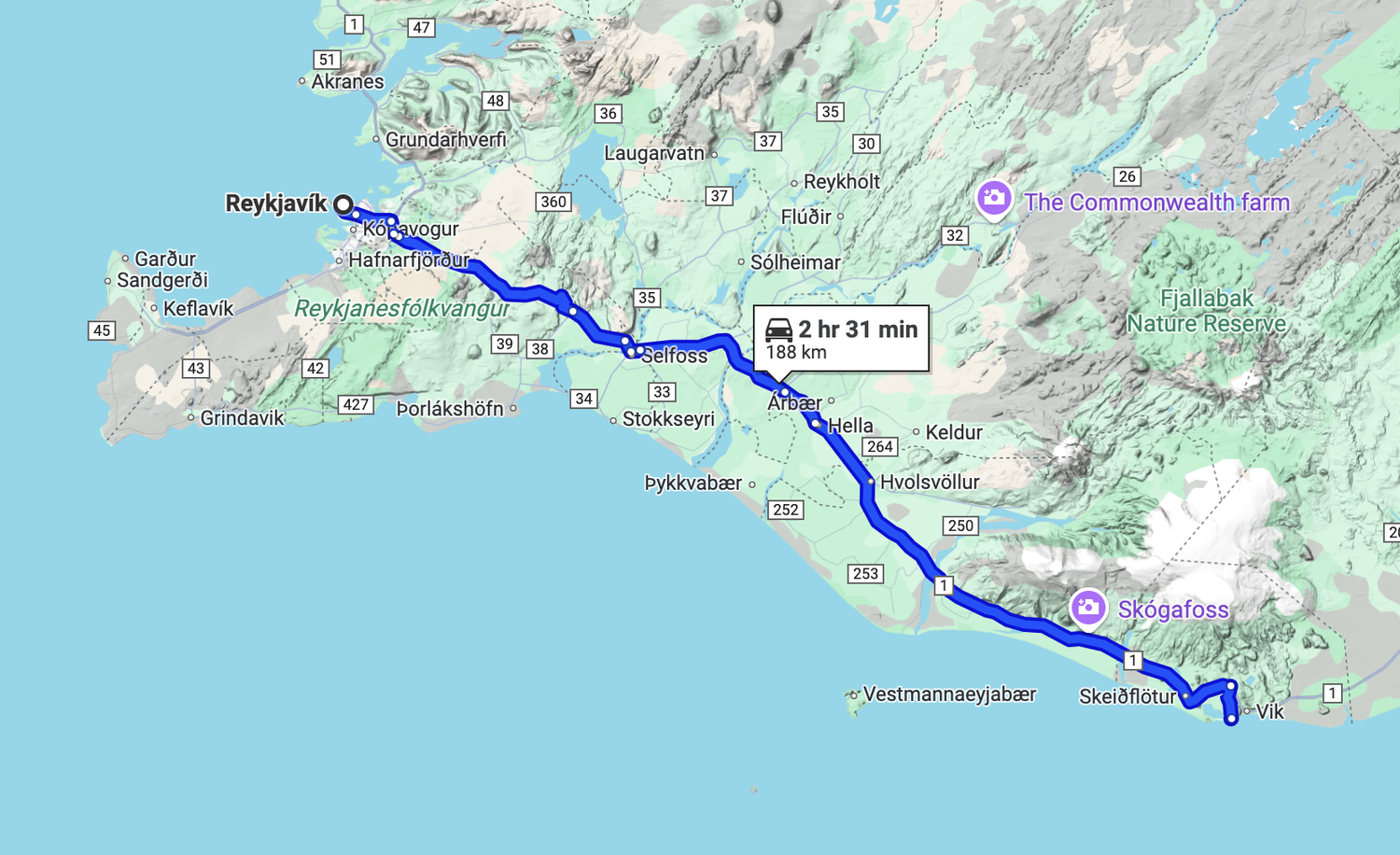
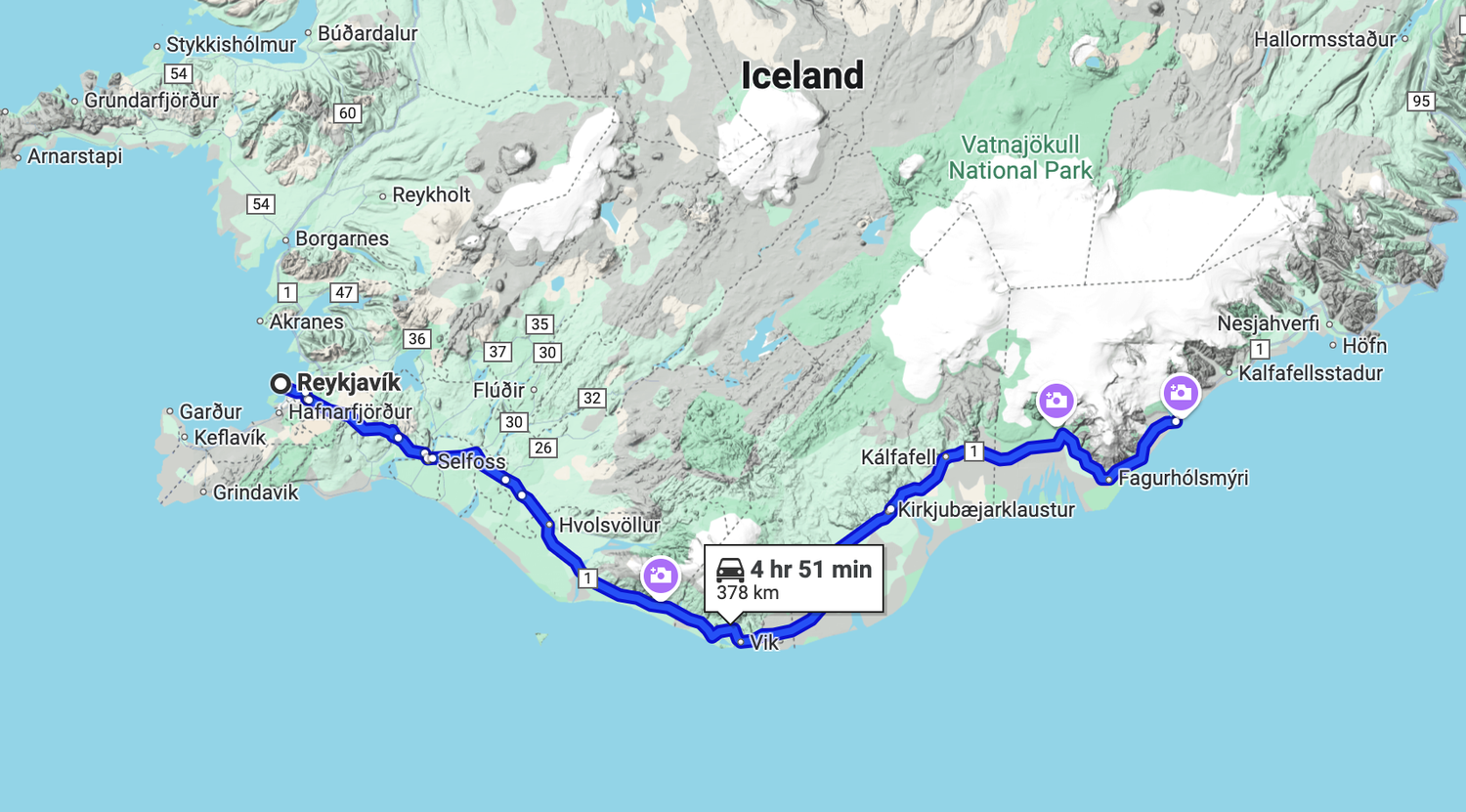
The south coast is the most accessible route and covers the most ground. Seljalandsfoss is around two hours from the capital. Reynisfjara a little further. Jökulsárlón is closer to five hours, which makes it a full day commitment, but couples who make the drive tend to feel it was worth it. The glacier lagoon does not look real until you are standing next to it.
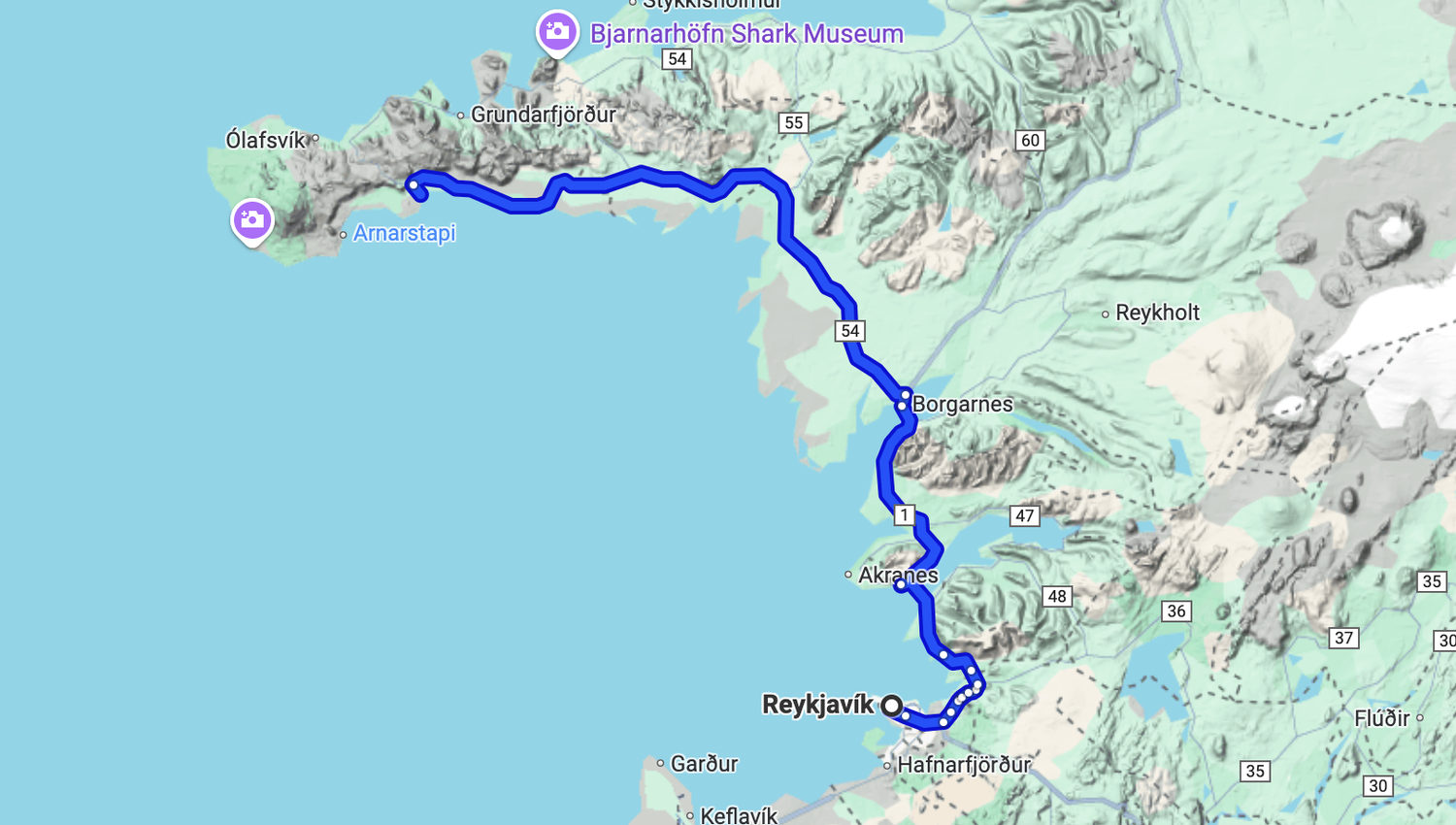
Snæfellsnes sits to the west, around two and a half hours from Reykjavik, and feels noticeably quieter than the south coast. Fewer tour buses, more space, a different pace entirely.
None of these locations require specialist equipment or serious physical ability to reach. Most involve a short walk from a car park. The wildness is in the landscape itself, not in how hard it is to get there, which means an Iceland elopement is genuinely accessible for most couples regardless of fitness level or experience.
The cost varies depending on season, how far you travel, and who you bring with you. Summer tends to be the most expensive time for accommodation and car hire. Spring and autumn offer a quieter experience at lower prices, with the trade-off being less predictable weather, which in Iceland is always part of the deal anyway.
Iceland tends to get under your skin. Some couples have been once and spent the flight home already thinking about going back. Others have never visited but keep returning to it when everything else feels too big or too formal. Either way, the decision to elope here usually feels less like a compromise and more like the thing that made sense all along.
This guide covers everything worth knowing before you start planning. Locations, legalities, seasons, costs, what to look for in a team, and what the day actually tends to feel like when it comes together. Whether your date is six weeks away or still just an idea, start here.
How to Elope in Iceland: Step-by-Step Elopement Guide
Planning an Iceland elopement is straightforward once you know what order to think about things. The decisions you make early, date, season, location, shape everything that follows. Get those right and the rest tends to fall into place. Here is how to approach it.
Step 1: Start With What Feels Right
Before locations, before dates, before budgets, just think about what kind of day actually appeals to you both.
Black sand beach or remote waterfall. One location or several. A ceremony at sunrise before anyone else arrives, or late evening when the light goes golden and stays that way for hours. A single quiet day or a few days of driving and stopping wherever looks good. Iceland accommodates all of it, which means the starting point is knowing roughly what you are after.
Season matters more here than in most destinations. Summer gives you the midnight sun and full access to highland roads, but also peak tourist numbers at the popular spots and higher prices across the board. Winter is quieter and cheaper, with short days and a genuine chance of snow, which changes both the look of the landscape and how the day needs to be planned. Spring and autumn sit in between, softer light, fewer crowds, more unpredictable weather.
Start a rough budget early. Flights, accommodation, car hire, your creative team, any activities you want to build in. Iceland is not cheap, but knowing your range early helps you make decisions without second-guessing everything later.
Step 2: Choose Your Season
The season shapes the day more than almost any other decision.
Summer (June to August) is the most popular time for an Iceland elopement. Long days, warm enough to be comfortable, and all locations accessible including highland F roads from late June. The trade-off is tourism. Popular spots like Reynisfjara and Seljalandsfoss get busy mid-morning once the tour buses arrive. Earlier starts help.
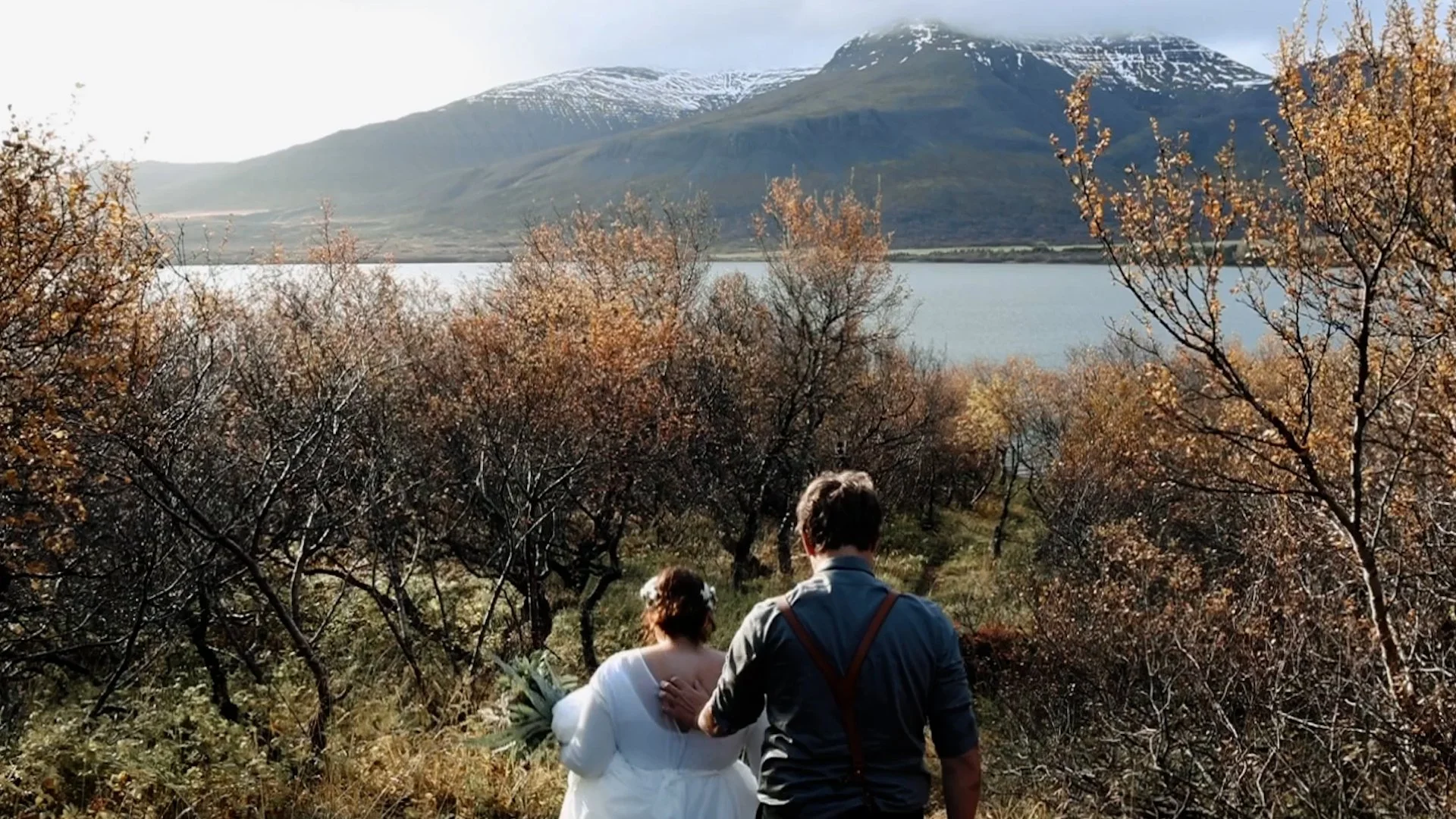
Autumn (September to November) is quieter. The light is softer and lower, the crowds thin out noticeably, and from September onwards there is a real chance of northern lights as the nights grow longer. September and October are particularly good, a point where summer accessibility and autumn atmosphere overlap.
Winter (December to February) offers the most privacy and the longest nights for aurora viewing. Daylight is limited, sometimes as few as four hours, so driving time has to be factored in carefully. Some roads close and conditions can be challenging, but the landscape is unlike any other season.
Spring (March to May) is still relatively quiet, waterfalls are full from snowmelt, and early spring still carries a chance of northern lights before the nights get too short. Some highland roads remain closed into May, so location options can be limited depending on your date.
Step 3: Choose Your Location
Iceland elopement locations broadly split into a few areas, and which one suits you depends on how much driving you want to do, how private you want the day to feel, and what kind of landscape appeals.
The south coast is the most popular route. Seljalandsfoss and Skógafoss are both within around two hours of Reykjavik, dramatic and accessible, though busy mid-morning once tourism picks up. Reynisfjara black sand beach sits a little further, around two and a half hours, powerful and atmospheric but exposed to wind and wave, so positioning matters. Jökulsárlón glacier lagoon is closer to five hours from the capital, a full day commitment, but the landscape there is unlike anything else on the island.
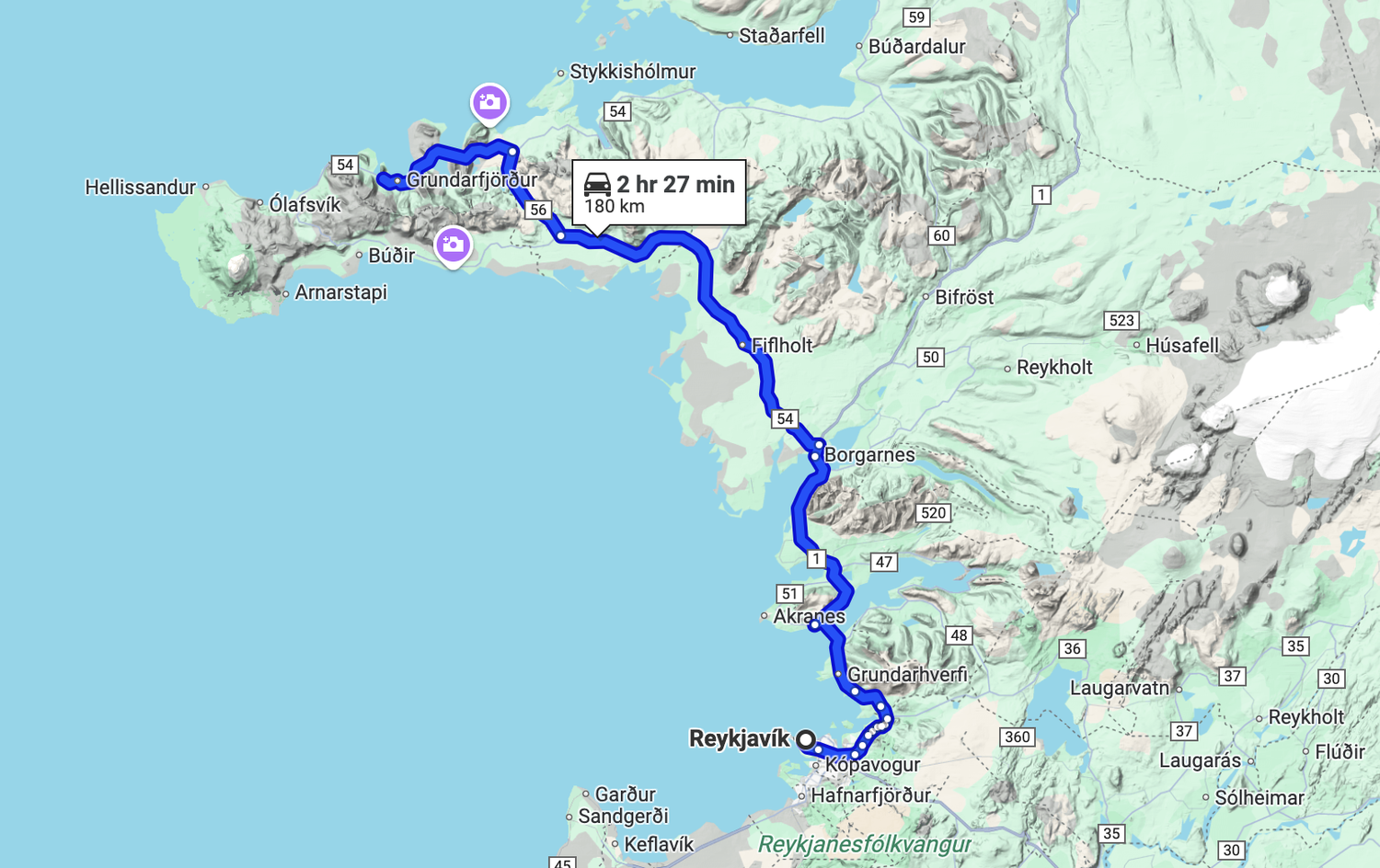
Snæfellsnes to the west takes around two and a half hours from Reykjavik and feels noticeably different to the south coast. Quieter, more remote, with Kirkjufell sitting at the end of a road that rewards the drive. If you want space and privacy without travelling as far as the highlands, this peninsula is worth serious consideration.
The key question is not which location looks best in photos but how the day will actually feel. A sunrise start at Reynisfjara with nobody else around is a completely different experience to arriving mid-afternoon. Timing changes everything at the popular spots.
Step 4: The Legal Side
Iceland legally recognises marriages for all couples regardless of nationality, gender, or orientation, with no residency requirement. You can hold the ceremony almost anywhere.
For a legal ceremony you will need to submit the following documents to the National Registry Office in Reykjavik at least three weeks before your date. Originals must arrive in person or by post no later than five days before the ceremony.
- Marriage Notification Form (Hjónavígsluskýrsla), signed by both parties and two witnesses
- Valid passports
- Birth certificates
- Certificate of marital status, issued within eight weeks of your wedding date
- Divorce decree or death certificate if applicable
- Proof of legal stay in Iceland
- Certified translations of any documents not in English, Icelandic, or a Scandinavian language
After the ceremony you can request an official marriage certificate in English.
A lot of couples choose to handle the legal paperwork at home and have a symbolic ceremony in Iceland instead. It keeps the day simpler and removes the document deadline pressure entirely. The experience of saying your vows in Iceland is just as real either way.

Step 5: Book Your Team
Your elopement team is worth thinking about carefully. Not just who is available on your date, but who you actually want to spend the day with.
A good Iceland elopement planner takes the logistics off your plate entirely. They know which locations work at which times of year, which roads need specific vehicles, how to build a timeline with enough flexibility that a weather change does not derail everything, and who to call when something needs adjusting on the day. If you are planning from overseas, that local knowledge makes a significant difference.
Book your videographer and photographer at the same time, not as an afterthought. Summer dates in particular fill up months in advance, and the right fit matters more than people expect. You will be spending the whole day with these people in remote locations. A quick call before booking tells you a lot.
Pink Iceland are experienced and well regarded if you are looking for somewhere to start. pinkiceland.is
Step 6: Plan the Trip Around the Day
Once your date and team are confirmed, the practical planning becomes straightforward.
Flights into Reykjavik are the standard entry point. Book accommodation close to wherever you plan to spend most of the day, staying an hour or more from your first location tends to make mornings feel rushed before anything has even started.
Car hire is essential. A standard vehicle covers most south coast locations, but if your plans involve F roads you are legally required to have a 4x4. Build driving time into your plan generously. Iceland's roads are often single lane and conditions can slow things down.
Icerental 4x4 are well regarded and worth booking early, particularly for summer.
Leave room in the trip for the parts that are not planned. A hot spring on the way back, a spontaneous stop somewhere that looked interesting from the road, a long dinner somewhere quiet that evening. The elopement day is the centrepiece but the days around it are part of it too.
Read: how to travel to Iceland with your wedding dress or suit
Step 7: Finalise the Details and Prepare for Your Elopement Day
Once your team is confirmed and your timeline is roughly in place, the remaining details tend to come together fairly quickly. Officiant, flowers, hair and makeup if you want them, any adventure activities you plan to build around the elopement day, and restaurant reservations if you have specific places in mind for the evening. Iceland does not require elaborate wedding logistics. Most of what makes the day work is already sorted by this stage. What is left is making sure you have given yourself enough time on the day to actually be there.
Iceland Elopement Locations Worth Knowing About
Ceremony Details
Officiant
Iceland recognises civil, religious, and humanist officiants, and many are English-speaking. If you are working with a local planner they will usually have someone they recommend. If not, it is worth arranging early as availability can be limited in peak season.
Witnesses
Two witnesses are required for a legal ceremony. If you are travelling without guests your videographer and photographer can fill that role. Most have done it before and it adds something to the day rather than making it feel administrative.
Permits
Most outdoor locations in Iceland do not require a permit for a small ceremony. There are exceptions around certain protected areas and privately managed land, so it is worth checking in advance if you have a specific spot in mind. The general principle is to leave no trace, which applies everywhere regardless of permit requirements.
Seasonality
There are no seasonal restrictions on when you can hold a ceremony in Iceland. Every season has its own character and its own practical considerations, but none of them make the place any less worth showing up for.
The Legal Steps in Brief
- Choose your date and location
- Gather and submit all required documents to the National Registry Office at least three weeks before your ceremony
- Confirm your officiant, witnesses, videographer, and photographer
- Have your Iceland elopement
- Request your official marriage certificate in English afterwards
When is the Best Time of Year to Elope in Iceland?
June, September, and October are personal favourites, but the honest answer is that the best time depends on what you actually want the day to feel like.
Every season in Iceland involves some compromise. Summer gives you the most light and the easiest access but also the most company at popular locations. Winter gives you privacy and the possibility of snow and northern lights but a very narrow window of daylight to work within. Spring and autumn sit somewhere in between, quieter than summer, more accessible than winter, with weather that keeps you on your toes either way.
None of them are wrong. Each one produces a completely different version of Iceland, and the couples who tend to have the best experience are the ones who choose a season for what it actually offers rather than what they hope it might deliver.
Here is what each one looks like in practice.
Summer in Iceland (June–August)
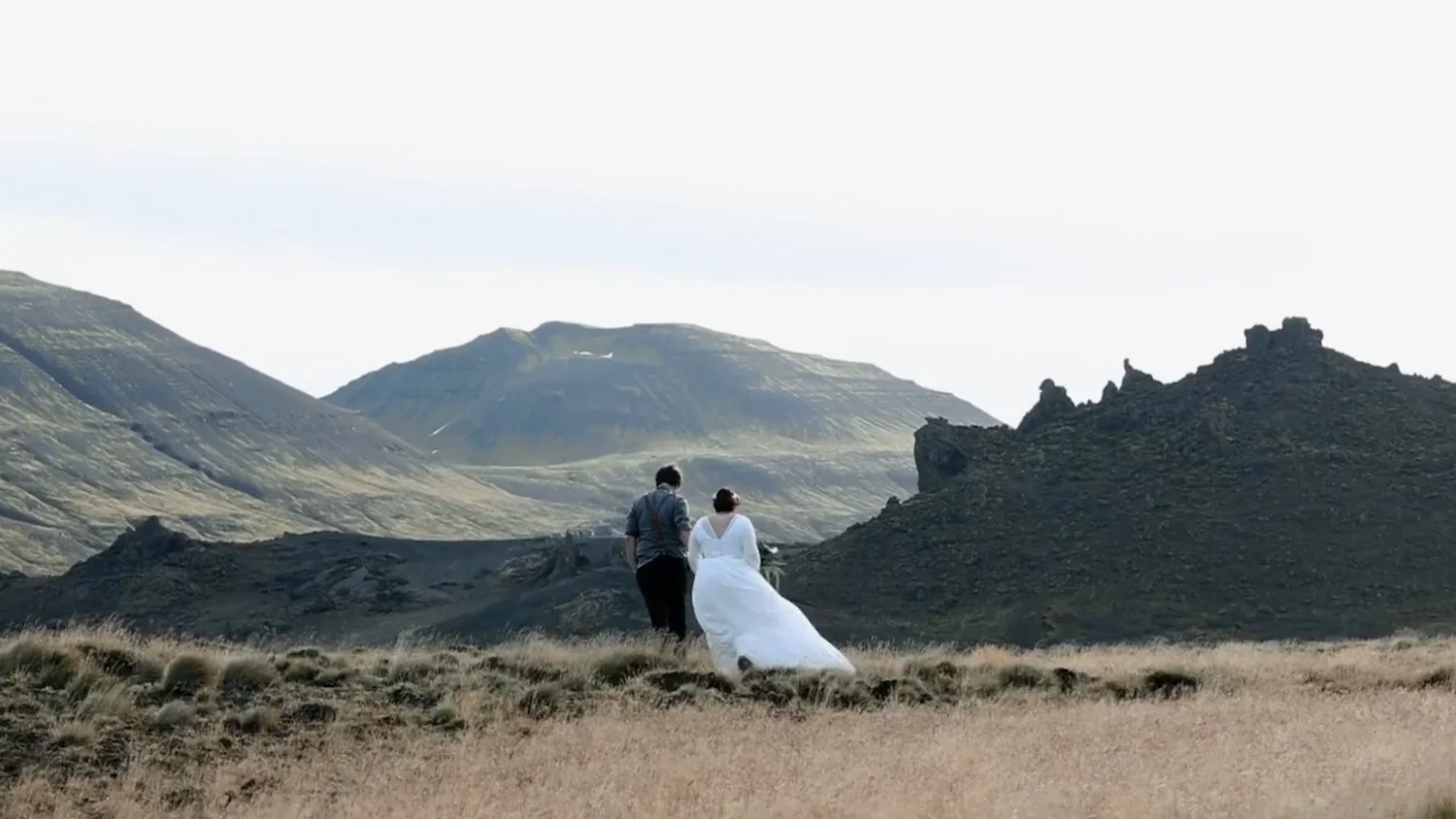
Summer is the most popular time to elope in Iceland, and the reasons are straightforward. The days are long, the highland roads are open from late June, and the light in the evenings does something that most couples are not prepared for. At midsummer the sun barely sets. By 10pm it is still warm, low, and directional, which means ceremony timing becomes something you can actually play with rather than race against.
The lupine flowers bloom across the roadsides from late May into July. All locations are accessible. Popular spots on the south coast get busy once the morning tours arrive, but an early start at somewhere like Reynisfjara or Seljalandsfoss changes the experience significantly.
Pros of a summer Iceland elopement:
- Long days with soft golden light that can last until midnight
- Full access to all locations including highland F roads from late June
- Warmest and most comfortable conditions of the year
- Widest range of adventure activities available
Cons of a summer Iceland elopement:
- Popular locations get busy mid-morning when tour groups arrive
- Peak prices for accommodation and car hire
- No northern lights due to the brightness of the nights
Fall in Iceland (September–November)
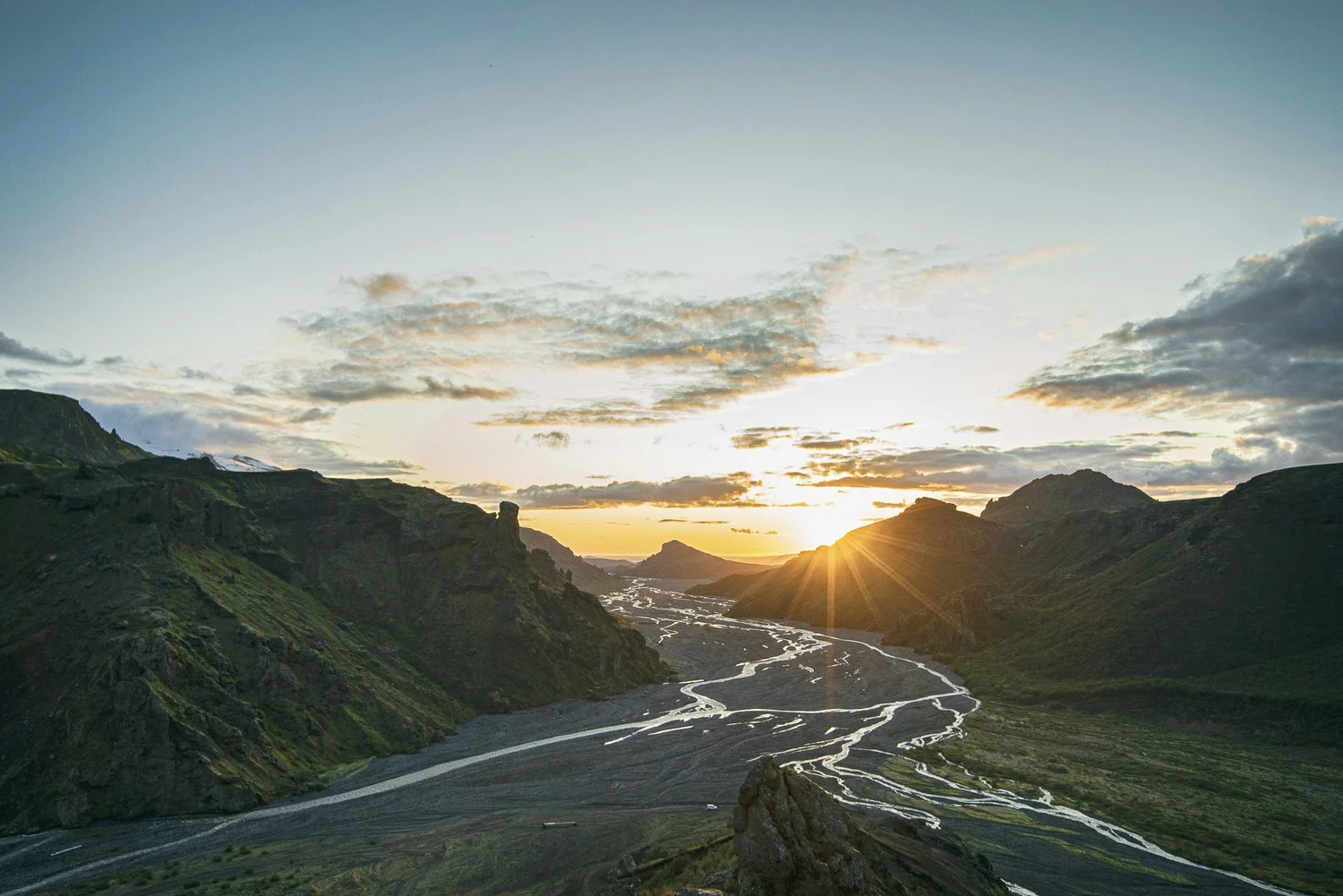
Fall is quieter than summer and for many couples that is exactly the point. The tourist numbers drop noticeably from September, the light shifts to something softer and more golden, and the northern lights start to appear as the nights grow longer. September and October sit in a particularly good window, summer accessibility without summer crowds, and a real chance of aurora if the skies are clear.
The landscape changes too. Greens give way to rusted browns and the air gets sharper. It feels like a different country to the one that exists in July, not better or worse, just distinct.
Weather becomes less predictable from October onwards. Snow is possible, some highland roads begin to close, and temperatures drop faster than you might expect.
Pros of an autumn Iceland elopement:
- Fewer tourists and more privacy at popular locations
- Softer, more directional light as the sun sits lower
- Northern lights possible from September onwards
- Lower prices for accommodation and car hire than summer
Cons of a fall Iceland elopement:
- Weather becomes increasingly unpredictable from October
- Some F roads and highland locations begin closing in September
- Daylight hours shorten noticeably through November
Winter in Iceland (December–March)
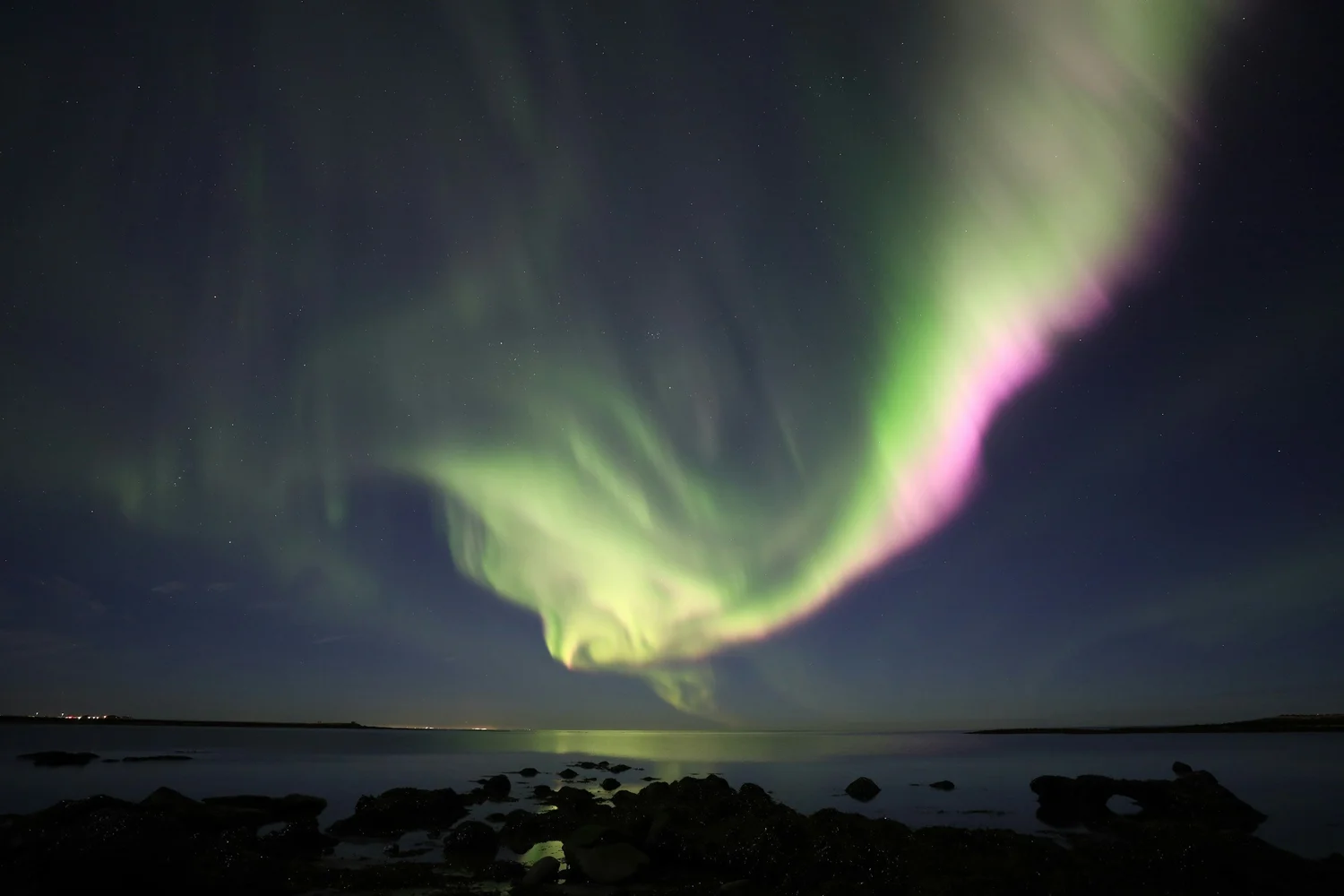
Winter elopements in Iceland are not for everyone, and that is part of what makes them work for the couples who choose them. The days are short, sometimes only four hours of usable light, the roads require more careful planning, and conditions can change fast. But the privacy is unmatched, the landscape is completely different to any other season, and the chance of northern lights is at its highest.
Frozen waterfalls, snow-covered lava fields, ice on the black sand beaches. Popular locations that feel crowded in July feel entirely your own in January. The trade-off is that everything requires more thought. Driving conditions, road closures, layering properly, building a timeline around a narrow window of light.
Pros of a winter Iceland elopement:
- Highest chance of seeing the northern lights
- Most privacy at popular locations
- Otherworldly snowy landscapes unlike any other season
- Lowest prices for accommodation and car hire
Cons of a winter Iceland elopement:
- Limited daylight, as few as four hours in midwinter
- Road conditions can be challenging and some routes close entirely
- Cold and wind require serious preparation
- Driving in winter conditions can be stressful for those unfamiliar with it
Spring in Iceland (March–May)
Spring is Iceland waking back up. Snowmelt fills the waterfalls, the days lengthen noticeably through April and May, and the crowds have not yet arrived in the numbers they will by summer. Early spring still carries a reasonable chance of northern lights, particularly March and into early April before the nights get too short.
Some highland roads remain closed into May depending on conditions, so location options can be limited if you are planning earlier in the season. Weather is unpredictable throughout, a clear morning can turn quickly, which is true of Iceland at any time of year but feels more pronounced in spring when the seasons are still in transition.
Pros of a spring Iceland elopement:
- Waterfalls at their fullest from snowmelt
- Quieter than summer with growing daylight
- Northern lights still possible in March and early April
- Lower prices than peak summer season
Cons of a spring Iceland elopement:
- Highland roads may still be closed in March and April
- Weather is unpredictable and can change quickly
- Some remote locations inaccessible earlier in the season
How to Choose the Best Season for Your Iceland Elopement
Start with what matters most to you and work backwards from there.
If northern lights are important, you need to be there between September and April, with winter giving you the longest nights and the best odds. If you want the midnight sun and maximum flexibility with locations, summer is the answer. If you want a quieter experience without the trade-offs of winter, September and October are the sweet spot.
Budget plays a part too. Summer is the most expensive time across flights, accommodation, and car hire. Spring and autumn offer similar landscapes at lower prices, with the understanding that weather will be less predictable.
A few practical questions worth asking before you decide:
- How important is privacy at popular locations?
- Are northern lights something you want to plan around or hope for?
- How comfortable are you driving in challenging conditions?
- How much daylight do you need to feel relaxed about the timeline?
- What does your budget allow across peak and off-peak seasons?
There is no wrong answer. Every season produces a version of Iceland that is worth showing up for. The best one is the one that fits what you actually want rather than what looks best in other people's photos.
Best Places to Elope in Iceland: Top Elopement Locations
Choosing where to elope in Iceland is one of the most enjoyable parts of the planning process and one of the most overwhelming. There is no shortage of extraordinary places, and the right one depends on what you want the day to actually feel like rather than what photographs well.
The questions worth asking before you decide: how far are you willing to drive, how much privacy matters, what time of year are you going, and what kind of landscape genuinely appeals to you both. A black sand beach and a glacier lagoon are both incredible but they are completely different experiences.
Here is an honest look at the most popular Iceland elopement locations, including what they are actually like to be at rather than just what they look like in pictures.
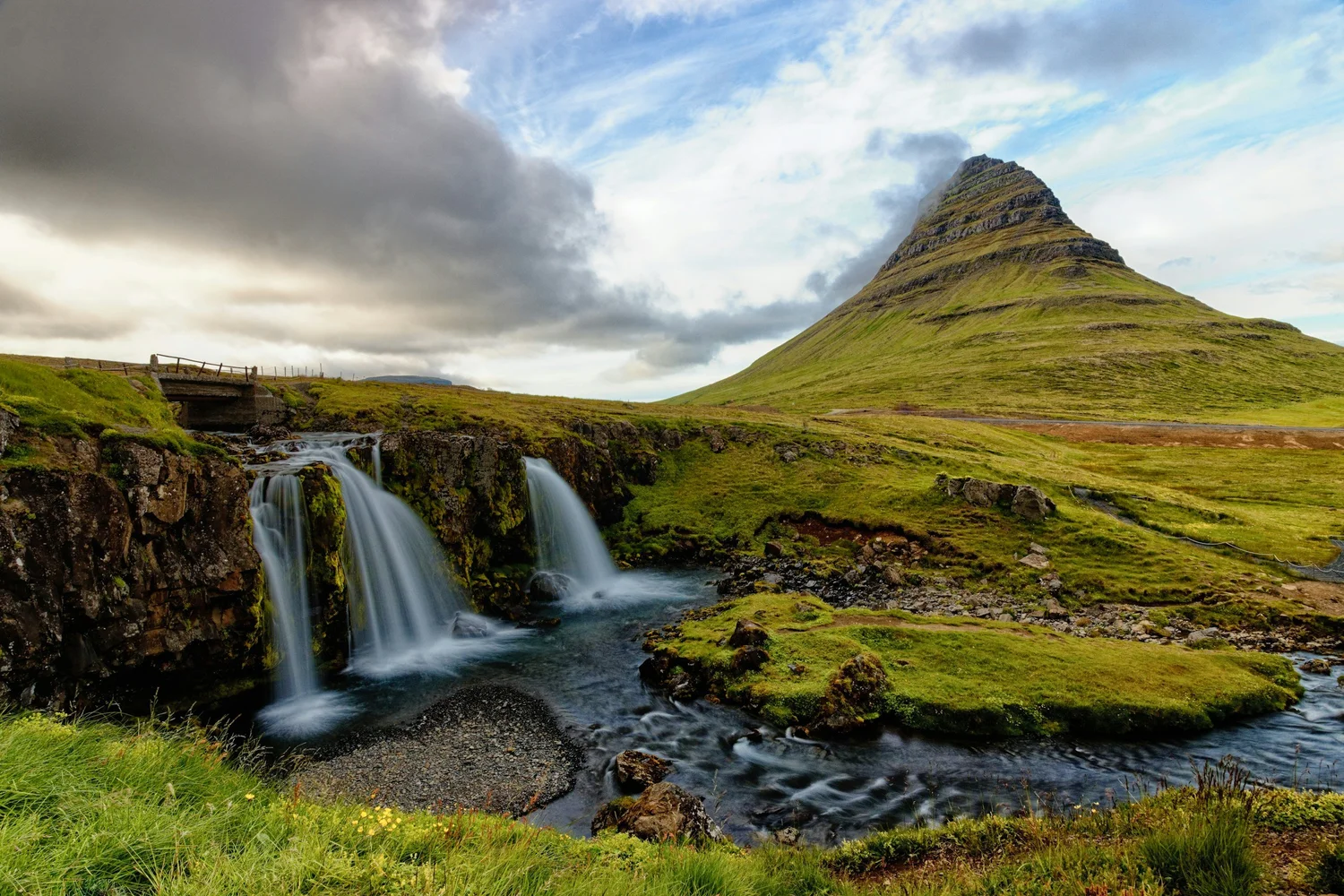
Kirkjufell, The Most Photographed Mountain in Iceland
Drive time from Reykjavik: approximately 2 hours 30 minutes
Kirkjufell sits on the Snæfellsnes Peninsula with Kirkjufellsfoss waterfall in the foreground and the ocean behind. It is the most photographed mountain in Iceland and the composition of mountain, waterfall, and sky is genuinely as striking in person as it looks. The drive out along the peninsula is worth factoring in as part of the experience rather than just transit time.
It is popular but not overwhelmingly so compared to the south coast locations. Earlier in the day and outside peak summer months it is possible to have the area largely to yourself. In winter it can be snow-capped, which changes the whole character of the place. In autumn the northern lights sometimes appear above it on clear nights.
A good choice for couples who want drama and scale without the full five-hour commitment to the glacier lagoon.
Reynisfjara Black Sand Beach, Otherworldly and Surreal
Drive time from Reykjavik: approximately 2 hours 30 minutes
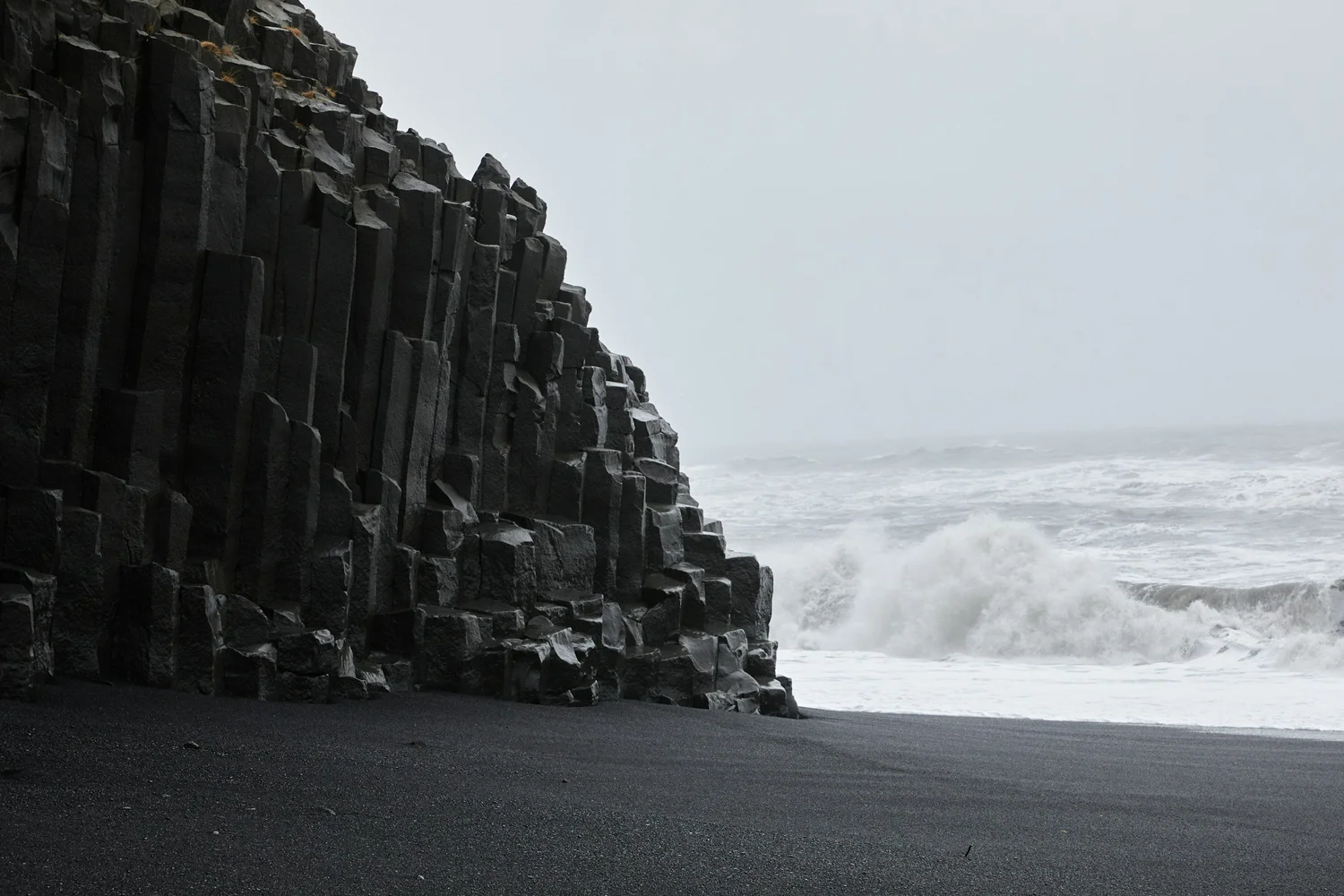
Reynisfjara is one of those places that genuinely looks like nowhere else. Black sand, towering basalt columns, powerful Atlantic waves, and a horizon that goes on indefinitely. The contrast between dark sand and wedding attire is striking, and the location has a moodiness that suits couples who want something dramatic rather than pretty.
The wind here can be significant, particularly in autumn and winter. Waves at Reynisfjara are dangerous and unpredictable, sneaker waves have caught visitors off guard, so positioning during a ceremony needs careful thought and staying aware of the water is not optional. That said, with proper planning it is a genuinely extraordinary place to say your vows.
Mid-morning in summer brings tour groups. An early start, before 8am, changes the experience entirely. The beach feels different when it is quiet.
Jökulsárlón Glacier Lagoon & Diamond Beach, Glistening and Magical
Drive time from Reykjavik: approximately 4 hours 50 minutes
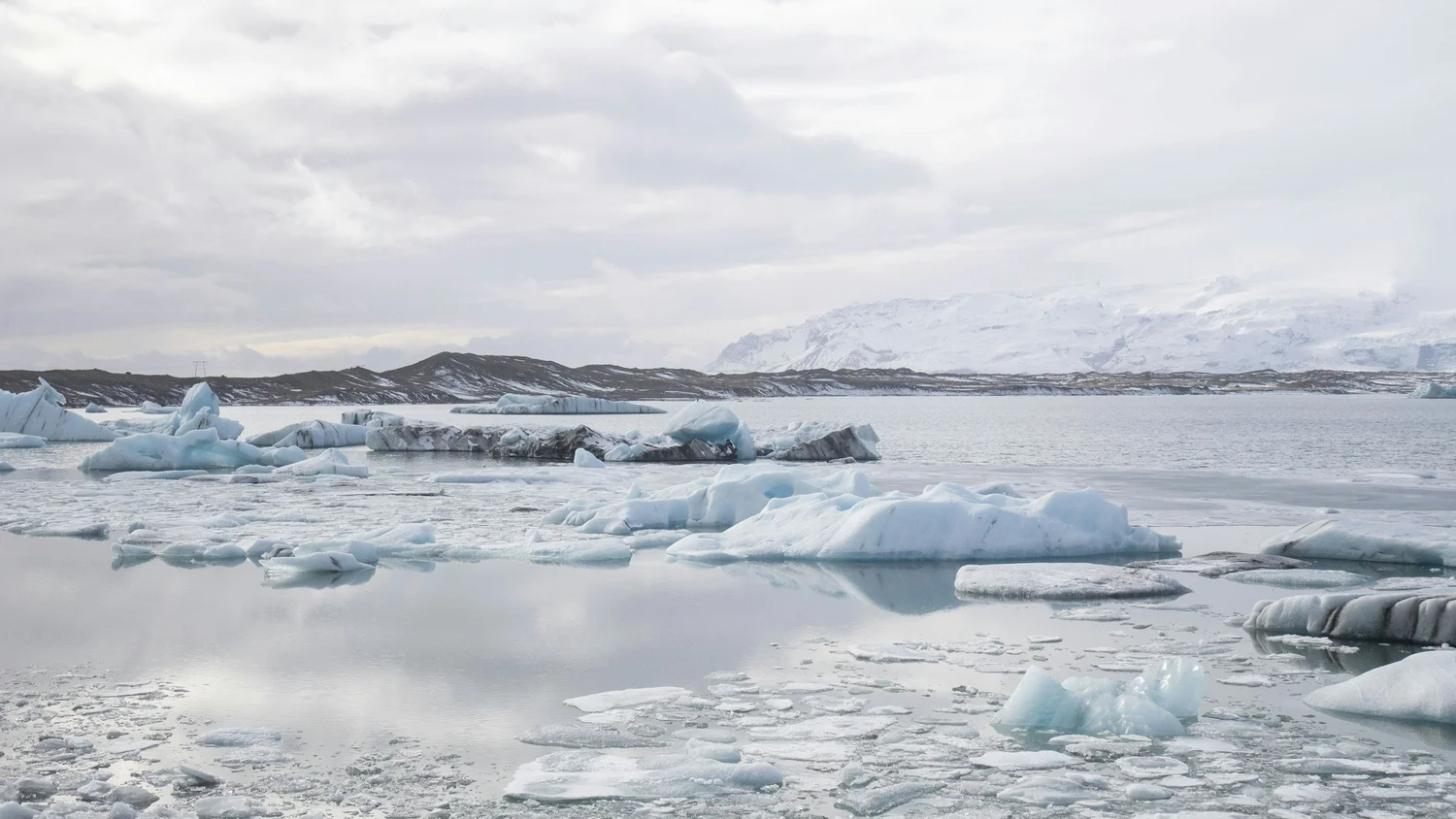
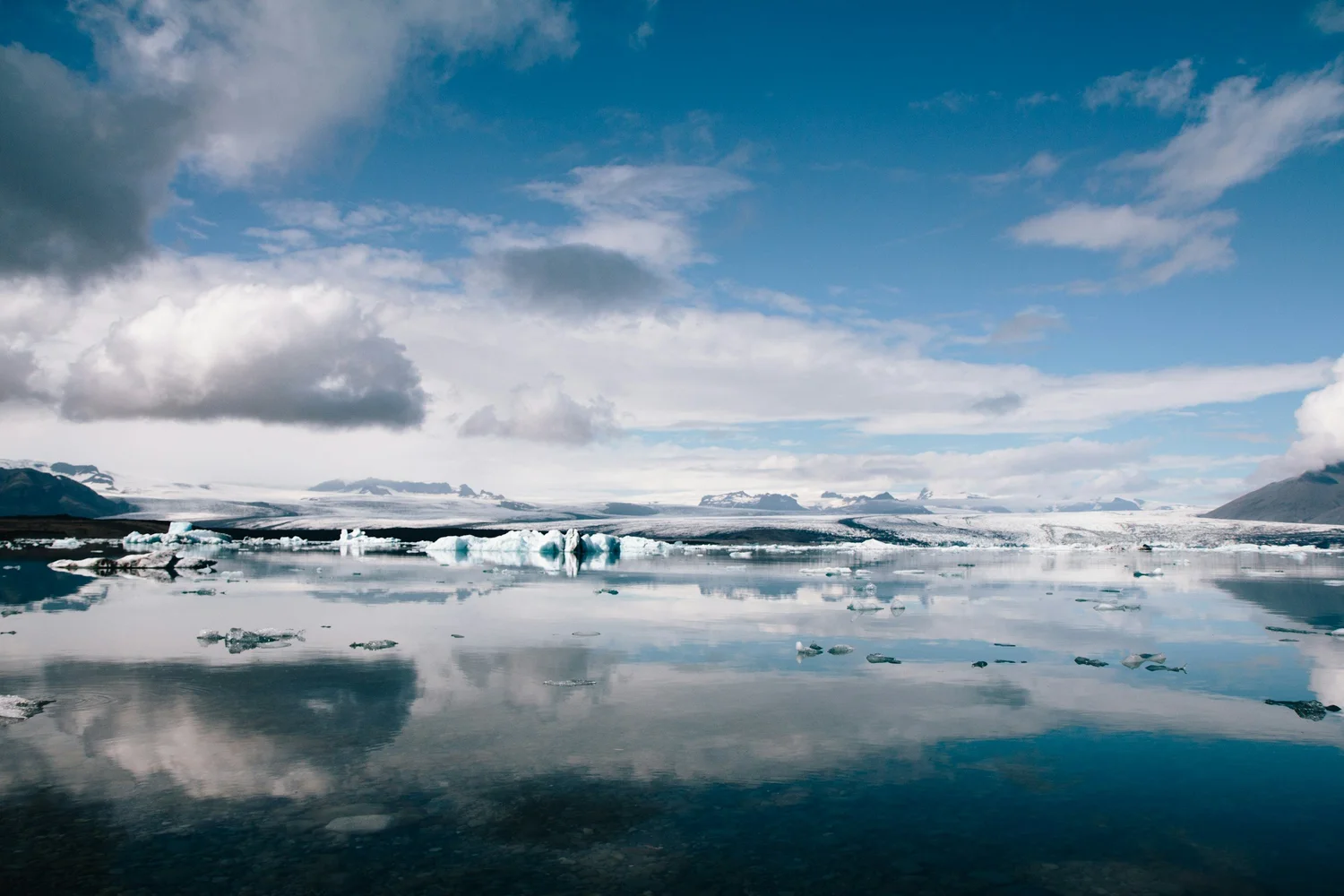
The furthest of the main south coast locations and the one that requires the most commitment, but couples who make the drive consistently say it was worth it. Icebergs calve from Breiðamerkurjökull glacier and drift slowly across the lagoon before washing up on the black sand beach opposite as translucent chunks of ice. Nothing else in Iceland looks quite like it.
The lagoon and Diamond Beach sit directly across the road from each other, so both are accessible within a short walk. In summer boat tours run on the lagoon itself. In winter the light is low and the ice takes on a blue quality that photographs and films unlike any other season.
Because of the distance from Reykjavik, most couples who include Jökulsárlón plan it as the centrepiece of the day rather than one stop among several. It deserves that kind of time.
Seljalandsfoss & Skógafoss: Iconic Waterfalls
Both waterfalls sit close together on the south coast and are often visited on the same day. They are different enough in character that they complement rather than repeat each other.
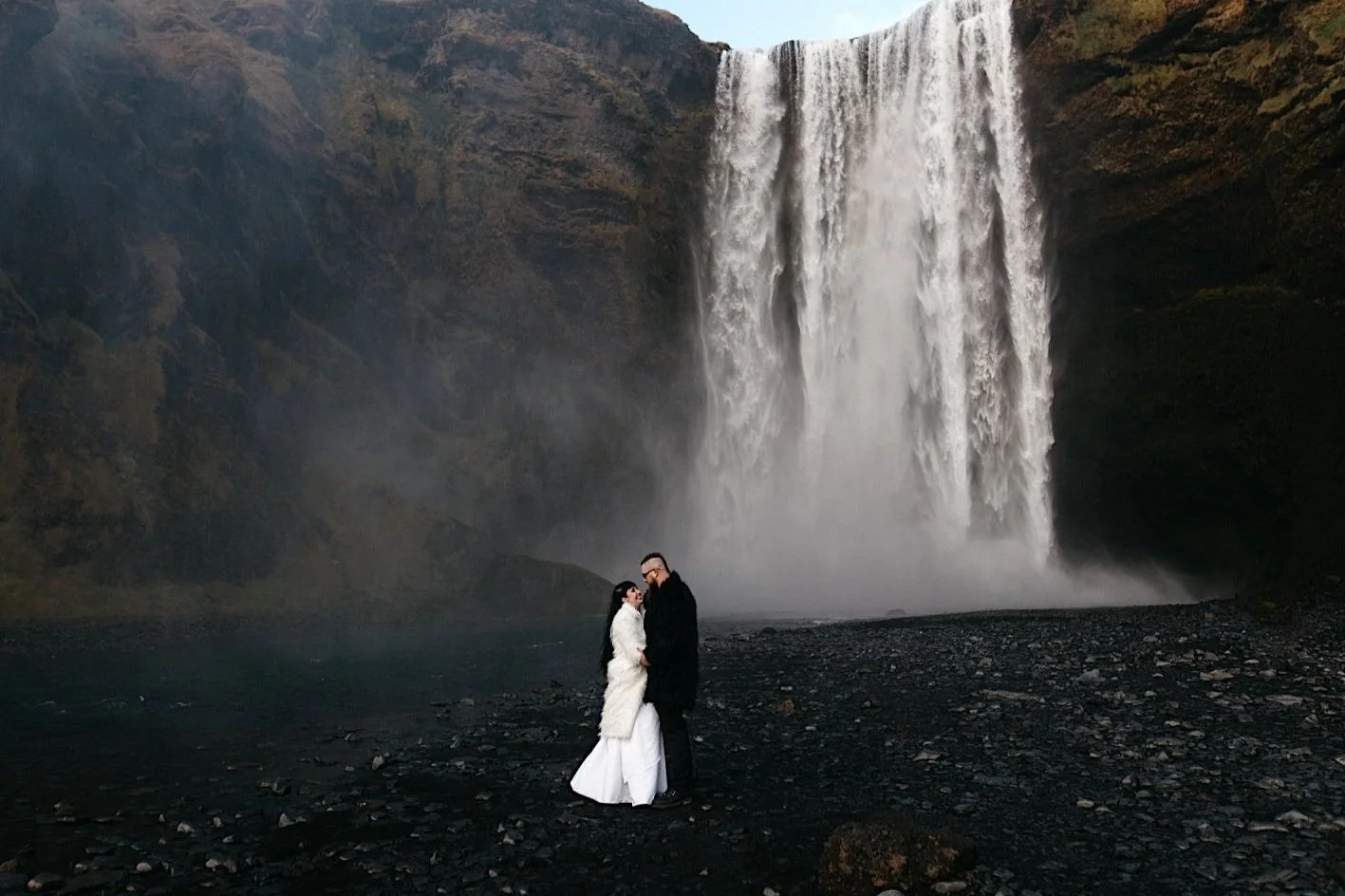
Skógafoss is powerful. The spray carries a long way and when the light hits it right the rainbows are genuine rather than incidental. It is busy in summer but quieter early morning, and the scale of it is something you feel before you see it properly.
Seljalandsfoss is narrower but lets you walk behind the curtain of water, which creates an unusual and intimate ceremony spot. Waterproofs are not optional if you plan to go behind it, and the path around can be slippery. Worth it for couples who want something a little different to a standard waterfall backdrop.
Búðakirkja (Budir Black Church)
Drive time from Reykjavik: approximately 2 hours 25 minutes
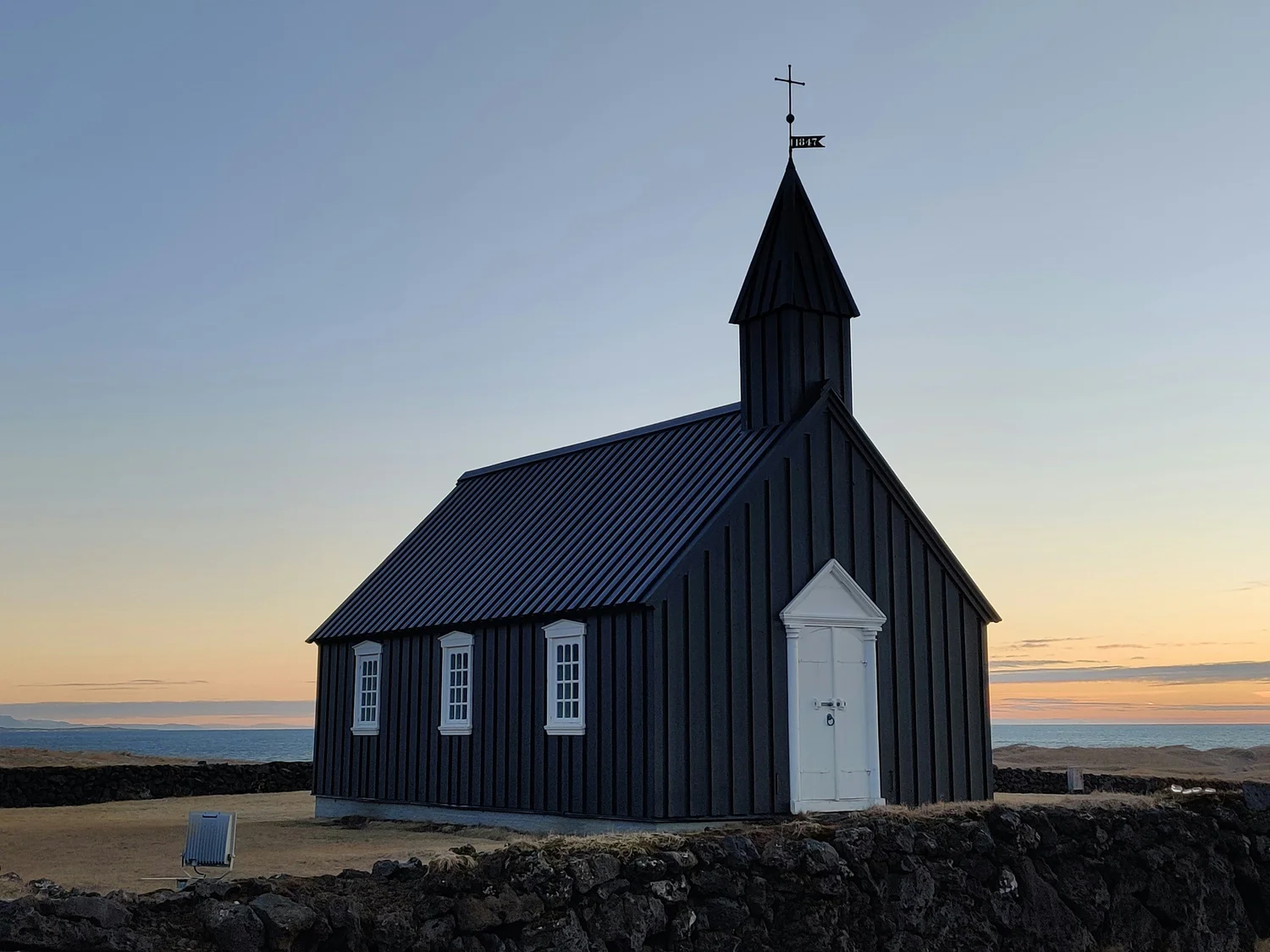
A small black wooden church on the Snæfellsnes Peninsula, set against lava fields with mountains and ocean in the background. Understated, quietly historic, and completely different in character to the waterfall and glacier locations. It works well for couples who want something with a sense of place and permanence without the scale of the south coast.
The surrounding lava fields are walkable and largely empty, which adds to the feeling of privacy. The peninsula itself rewards a slower pace and couples who combine Búðakirkja with other Snæfellsnes stops tend to find the day feels more personal than a south coast route.
Beyond the Famous Spots
The locations above are popular for good reason, but they are not the only options. Iceland has sea caves, lava cliffs, remote canyon viewpoints, and private waterfalls that most visitors never reach. These spots are harder to find independently but a good local planner or experienced Iceland elopement videographer will know where they are and whether they suit what you have in mind.
Sometimes the best Iceland elopement location is one that nobody else has heard of.
Iceland Wedding Venues and Elopement Packages
The Role of a Wedding Planner or Elopement Planner in Iceland
A local planner is not essential for every Iceland elopement, but for couples coordinating everything from overseas they make a significant difference. They know which locations work at which times of year, which suppliers are worth working with, and how to build a day that has enough flexibility to absorb whatever Iceland's weather decides to do.
Practically speaking, a planner handles the timeline, coordinates between your videographer, photographer, and officiant, suggests backup locations, and takes the logistical weight off you so the day can actually feel like yours. Some offer packages that include adventure activities or accommodation recommendations built around your elopement locations. Others work purely on coordination.
Pink Iceland are experienced and well regarded if you are looking for somewhere to start. pinkiceland.is
How to Find the Right Iceland Elopement Suppliers
Your suppliers are worth choosing carefully. Not just on availability or price, but on fit.
Look for people with real Iceland experience. The weather, the roads, the light, and the logistics of working in this landscape are specific enough that someone who has been here repeatedly will handle the day differently to someone who has not. Ask to see work shot in Iceland specifically, not just their general portfolio.
Style matters too. Your videographer and photographer have distinct approaches and the work should resonate with you before you book. If it does not excite you when you look at it now, it will not feel right on the day.
Schedule a call before committing. You will spend the whole day with these people in remote locations, sometimes in difficult conditions. Knowing they are easy to be around is not a small thing. The right fit tends to be obvious fairly quickly.
How Much Does It Cost to Elope in Iceland?
The cost of an Iceland elopement varies more than most couples expect when they first start researching. Season, location, how far you travel, who you bring, and how long you stay all play a part. Most couples also extend the trip into a honeymoon, which is worth factoring into the overall budget from the start rather than treating as a separate conversation.
The ranges below give a realistic picture across three different approaches to the day.
Typical Iceland Elopement Cost Ranges
- Budget elopement: $6,000 to $9,000 USD
- Mid-range elopement: $10,000 to $18,000 USD
- Luxury elopement: $20,000 to $50,000+ USD
7-Day Iceland Elopement Budget
| Expense | Budget | Mid-Range | Luxury |
|---|---|---|---|
| Flights | $1,200 | $2,000 | $2,000 |
| Accommodation | $800 | $1,700 | $3,200 |
| Car Rental | $300 | $800 | $1,200 |
| Photographer | $1,500 | $7,000 | $8,000 |
| Videographer | $2,500 | $7,500 | $9,500 |
| Elopement Package | $5,200 | $10,000 | $16,800 |
| Officiant | $400 | $700 | $1,000 |
| Flowers | $150 | $400 | $700 |
| Hair & Makeup | $100 | $300 | $800 |
| Meals | $600 | $1,400 | $1,400 |
| Activities | $500 | $1,200 | $2,900 |
| Miscellaneous | $100 | $300 | $500 |
| Total | $13,350 | $33,300 | $48,000 |

What Affects the Cost Most
A few things move the budget more than others.
Season. Summer is the most expensive time across flights, accommodation, and car hire. Spring and autumn offer similar landscapes at noticeably lower prices.
Location. Staying close to Reykjavik keeps costs down. Travelling to Jökulsárlón or the highlands adds driving time, fuel, and often an extra night of accommodation.
Your team. Experienced Iceland elopement videographers and photographers cost more than generalists, and for good reason. The ability to work confidently in Iceland's conditions, adapt when the weather changes, and know where to be and when, comes from repeated time here. It is worth budgeting for properly.
Activities. Glacier walks, super jeep tours, helicopter flights, and boat tours on the lagoon all add up quickly but can also be the parts of the trip couples remember most.
Tips for Managing Your Iceland Elopement Budget
- Book flights and accommodation early, prices shift significantly as dates fill up
- Travel in spring or autumn for lower prices without sacrificing the landscape
- Keep flowers simple, a small bouquet works beautifully against Iceland's scenery and costs a fraction of elaborate arrangements
- Combine the elopement and honeymoon into one trip rather than two separate costs
- Decide early what matters most and spend there, cut back on what does not
Iceland Elopement Videographer and Photographer: Capturing Your Adventure
When you do something this far from home, in a landscape this extraordinary, you want to be able to remember it properly. Not just the feeling of it but the actual detail. The sound of the waterfall, the way the light sat at that particular time of day, the moment before the vows when everything went quiet.
That is what good Iceland elopement videography does. It gives you something to go back to.
Why Iceland Elopement Videography MATTERS
Iceland's conditions are specific. The light changes fast, the wind affects audio, the weather can shift the plan mid-morning, and the driving distances between locations mean timing decisions have real consequences. A videographer who has worked here repeatedly handles all of that differently to someone experiencing it for the first time.
The footage itself is different too. Iceland's landscape does things that most shooting environments do not. The quality of evening light in summer, the way mist moves around a waterfall, the stillness of a glacier lagoon on a calm day. Knowing when to move and when to stay still, when to get closer and when to pull back, comes from time spent here.
Many couples share their film with family and friends who could not make the trip. It becomes the way people back home understand what the day actually felt like, which matters when the day happened somewhere most of them have never been.
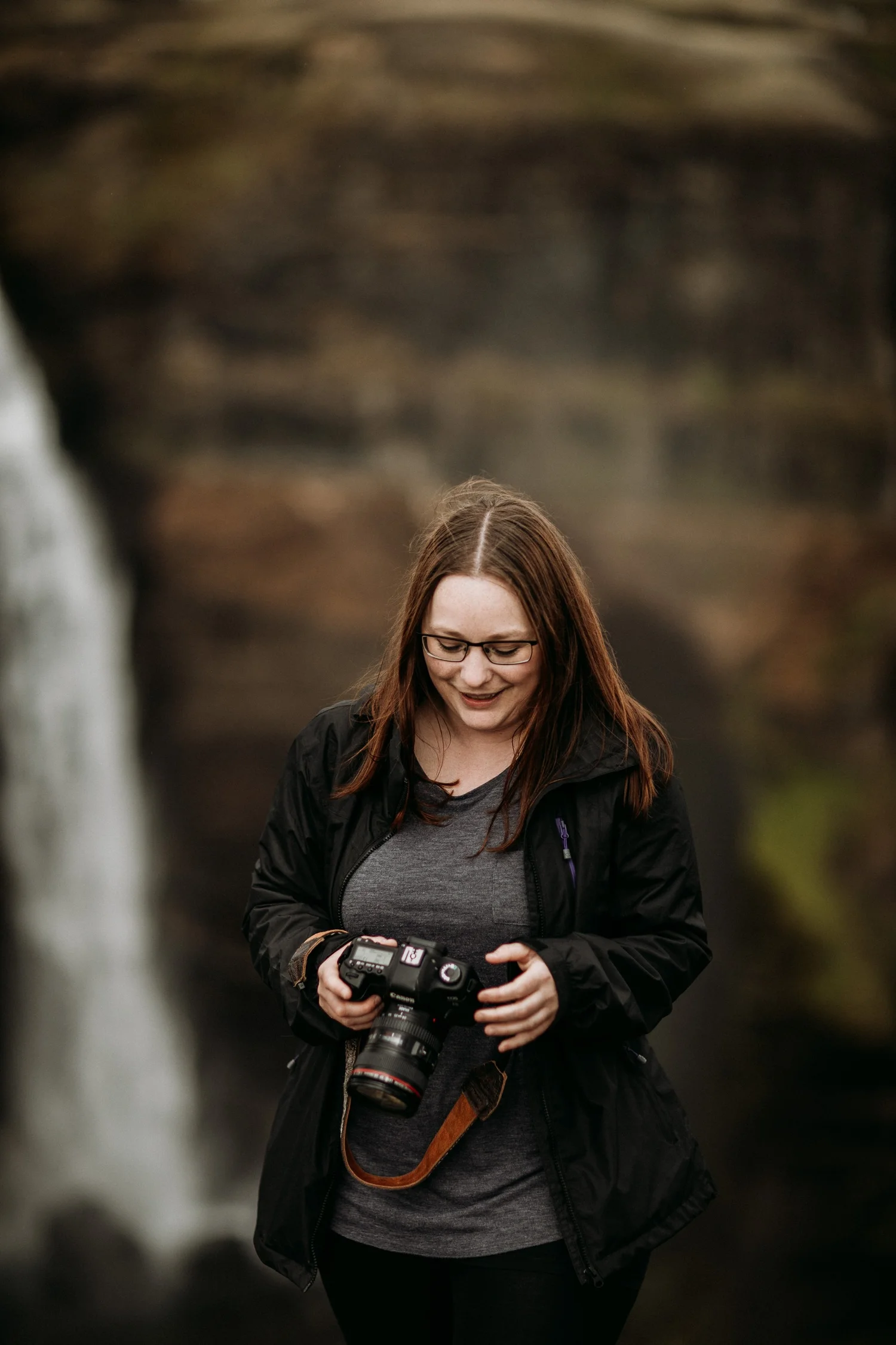
What to Expect from Iceland Elopement Video Packages
Packages vary but typically cover:
- Full day or multi-day coverage depending on your plans
- Drone footage where conditions and regulations allow
- A highlight film and sometimes longer cuts depending on the package
- Travel considerations built into the pricing for remote locations
One thing worth knowing: some photographers offer videography as an add-on rather than bringing in a dedicated videographer. Two separate specialists, each fully committed to their own craft, consistently produces better results than one person trying to cover both. It also means your photographer and videographer can work together without either one compromising what they are there to do.
Choosing the Right Iceland Elopement Videographer
Look for someone whose existing Iceland work resonates with you before anything else. Not just technically competent work, but films that feel like something. The style, the pacing, the way moments are handled. If it does not move you when you watch it now, it will not feel right when it is your day on screen.
Beyond the work itself, think about fit. You will spend the whole day with this person in remote locations, sometimes in difficult or uncomfortable conditions. A quick call before booking tells you a lot about whether the dynamic will work.
Ask specifically about their Iceland experience. How many elopements have they filmed here, which locations have they worked at, how do they handle audio in wind, what happens to the plan when the weather changes. The answers tell you whether the experience is real or approximate.
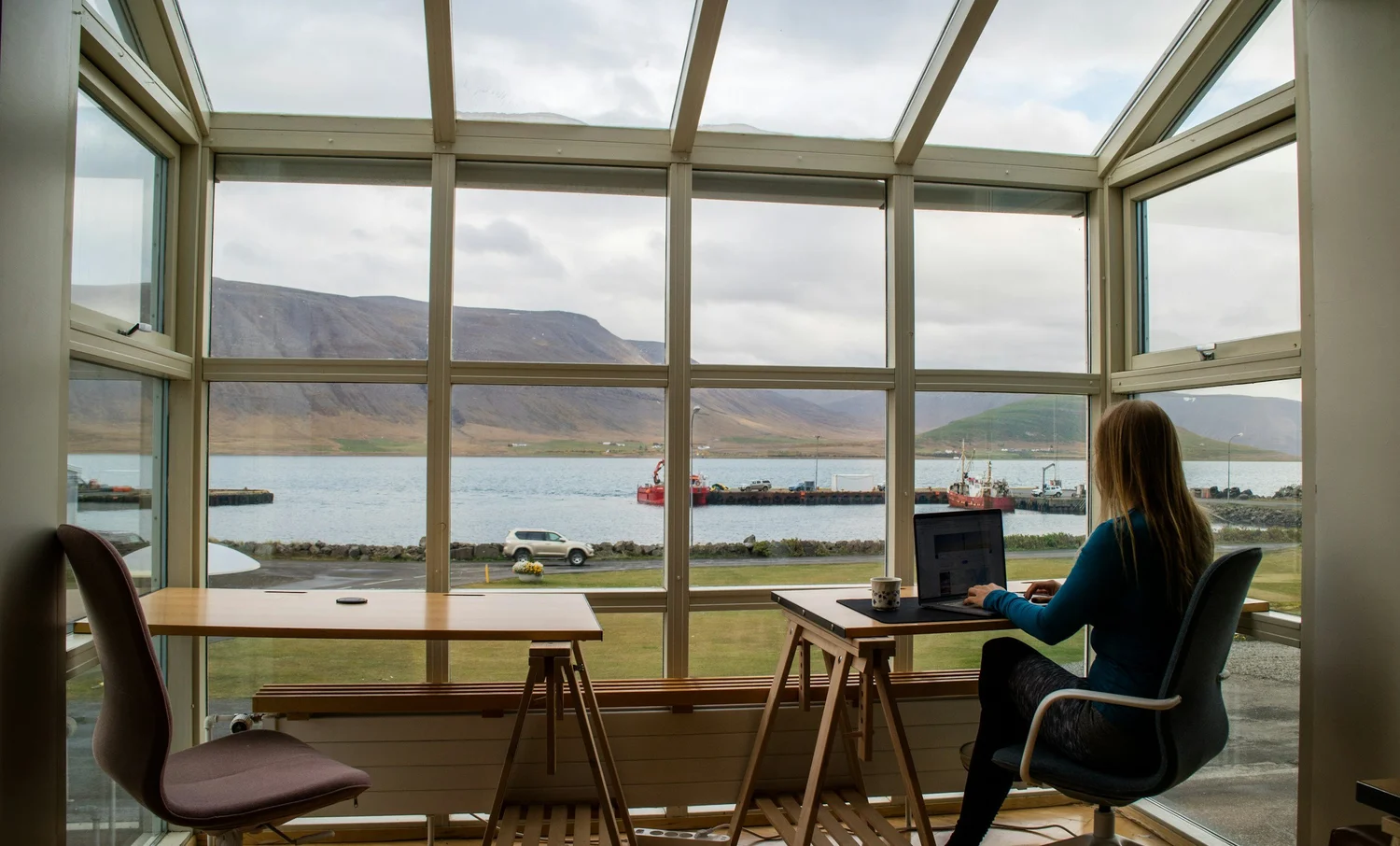
A Note on Investing in Your Film
An Iceland elopement is not something most couples repeat. The day happens once, in conditions that will not be exactly the same again, in a landscape that did something specific on that particular morning. Getting the film right is not a luxury consideration. It is the thing that lets you actually keep the day rather than just remember it.
Where to Stay in Iceland for Your Elopement
Accommodation in Iceland is worth thinking about as part of the elopement itself rather than just a practical necessity. Where you wake up that morning affects how the day starts, and how far you are from your first location affects how rushed or relaxed the whole thing feels.
Couples who stay an hour or more from where they plan to begin the day tend to arrive at their first location already behind. The drive eats into the morning before anything has happened. Staying close to your elopement area, even in simpler accommodation, usually makes the start of the day noticeably calmer.
Beyond logistics, Iceland has some genuinely extraordinary places to stay that add to the experience rather than just supporting it.
Places Worth Considering
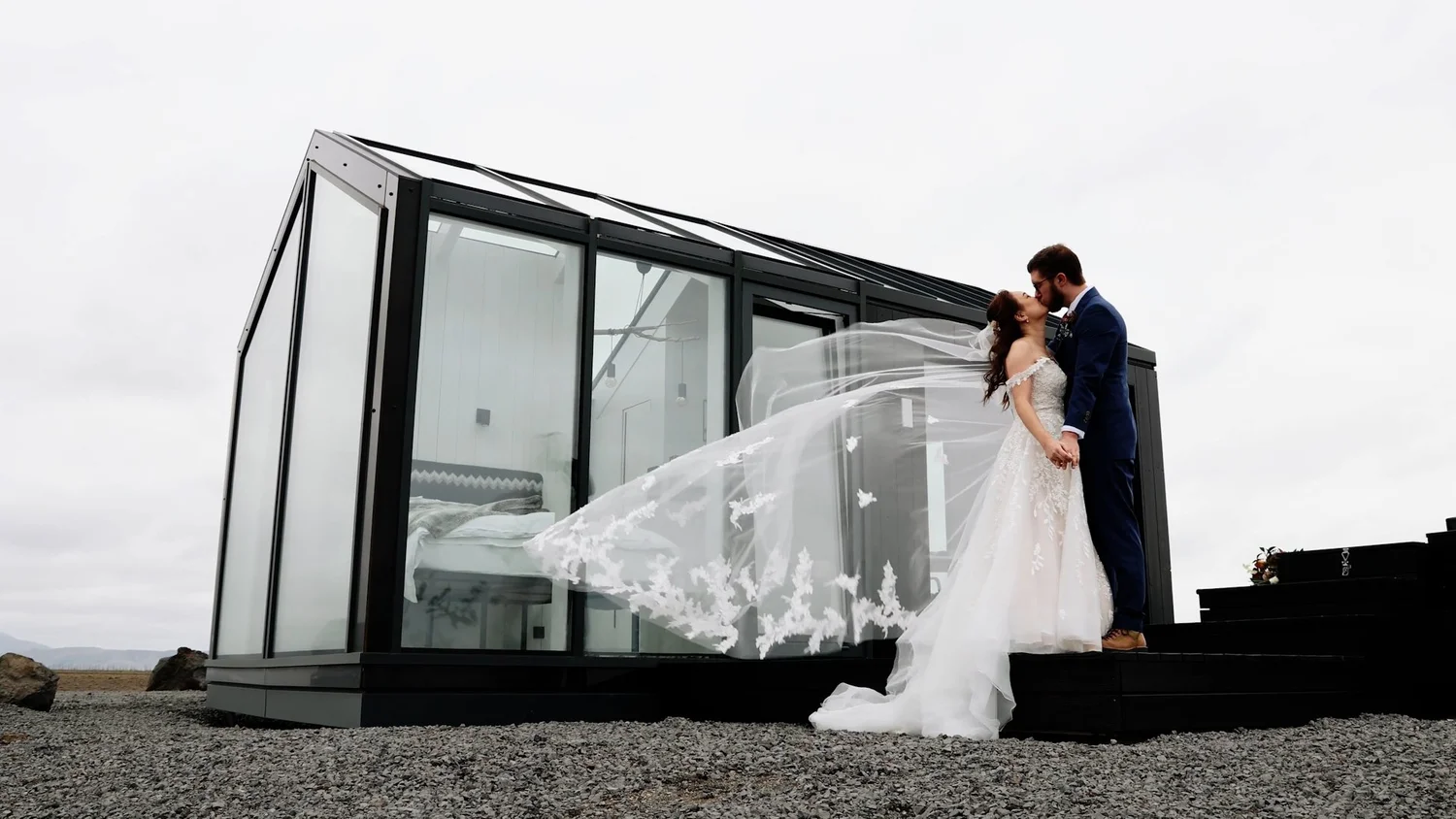
Panorama Glass Lodge: Private glass lodges where the sky is visible from bed. A genuine chance of watching the northern lights without leaving the room. One of the more unique accommodation experiences in Iceland and popular for good reason. panoramaglasslodge.com
Hotel Ranga: Riverside location with outdoor hot tubs and a level of comfort that works well as a base for south coast elopements. Well positioned for early morning starts towards Reynisfjara and the glacier lagoon. hotelranga.is
ION Adventure Hotel: A design hotel that sits dramatically in the landscape near Thingvellir National Park. Good base for couples wanting adventure activities built around the elopement days. ioniceland.is
The Retreat at Blue Lagoon: Private access to the geothermal lagoon, spa facilities, and a level of luxury that suits couples who want the elopement trip to feel like a full experience from arrival to departure. bluelagoon.com
Magma Hotel: Smaller and cosier than some of the others, with considered interiors and a quieter atmosphere. A good fit for couples who want comfort without scale. magmahotel.is
Hotel Geysir: Sits in the heart of the Golden Circle, well placed for south coast access and with some exceptional suites. Worth looking at if your elopement plan includes the Golden Circle route. hotelgeysir.is
Frost and Fire Hotel: Riverside location with geothermal pools and waterfalls nearby. A quieter option that suits couples who want something more intimate than the larger hotels. frostandfire.is
Location Tips
Reykjavik works well as a base if your elopement covers multiple areas or if you want easy access to restaurants and amenities around the day itself. It sits within reasonable driving distance of the Golden Circle and the start of the south coast.
Vik puts you closer to Reynisfjara, the south coast waterfalls, and the glacier lagoon, which makes early morning starts at those locations much more realistic. If the south coast is your focus, staying near Vik removes a significant amount of driving from the day.
Keep an eye out for the yellow school bus coffee shop near Vik. Worth a stop if you pass it.
Iceland Elopement Checklist
- Start with what you actually want. Before locations and dates, think about what kind of day appeals to you both. One spot or several. Private and remote or iconic and dramatic. A symbolic ceremony or a legal one. Budget range. Time of year. Getting clear on this early makes every other decision easier.
- Choose your season and confirm your date. Match the season to what matters most, midnight sun, northern lights, privacy, or accessibility. Check daylight hours for your date, road conditions for your planned locations, and whether F roads will be open if you need them.
- Book your team early. Reach out to your Iceland elopement videographer, photographer, and planner as soon as your date is confirmed. Summer dates in particular fill up months in advance. Locking in the right people early gives you time to plan the day properly together.
- Sort the legal or symbolic decision. Decide whether you want a legal ceremony in Iceland or whether you will handle paperwork at home and have a symbolic ceremony here. If legal, gather your documents and submit to the National Registry Office in Reykjavik at least three weeks before your date.
- Book accommodation close to your locations. Staying near where you plan to spend the day removes unnecessary driving from the morning and makes the whole day feel calmer. Confirm your car hire at the same time and make sure the vehicle suits the roads you plan to use.
- Build your timeline with realistic travel time. Iceland's roads take longer than maps suggest. Factor in driving time between locations, time at each spot, and enough flexibility that a weather change does not derail the plan. Arrange your officiant, flowers, hair and makeup, and any adventure activities you want to include. Book restaurant reservations in advance if you have specific places in mind.
- Think about what you are packing. Layers are essential regardless of season. Thermals under your wedding outfit, a warm and windproof outer layer nearby, and footwear with grip for uneven ground. Pack your rings and any personal items for the ceremony. Plan for weather that changes, because it will.
- Give yourself time on the day to actually be there. The tendency is to fill the schedule. Leave room for moments that are not planned. The unscheduled stops are often the ones that end up meaning the most.
- Share it when you get home. Your Iceland elopement film and photos are worth showing properly. A viewing with family and friends who could not be there gives them a way into the experience. It also gives you a reason to watch it again, which you will want to do anyway.
Iceland has a way of making the day feel like it belonged to you from the start. The planning matters, the team matters, the season matters. But what most couples say afterwards is that none of it felt as complicated as they expected, and that the place itself did most of the work.
If you are ready to start planning your Iceland elopement, or you just have questions about what it actually involves, get in touch.